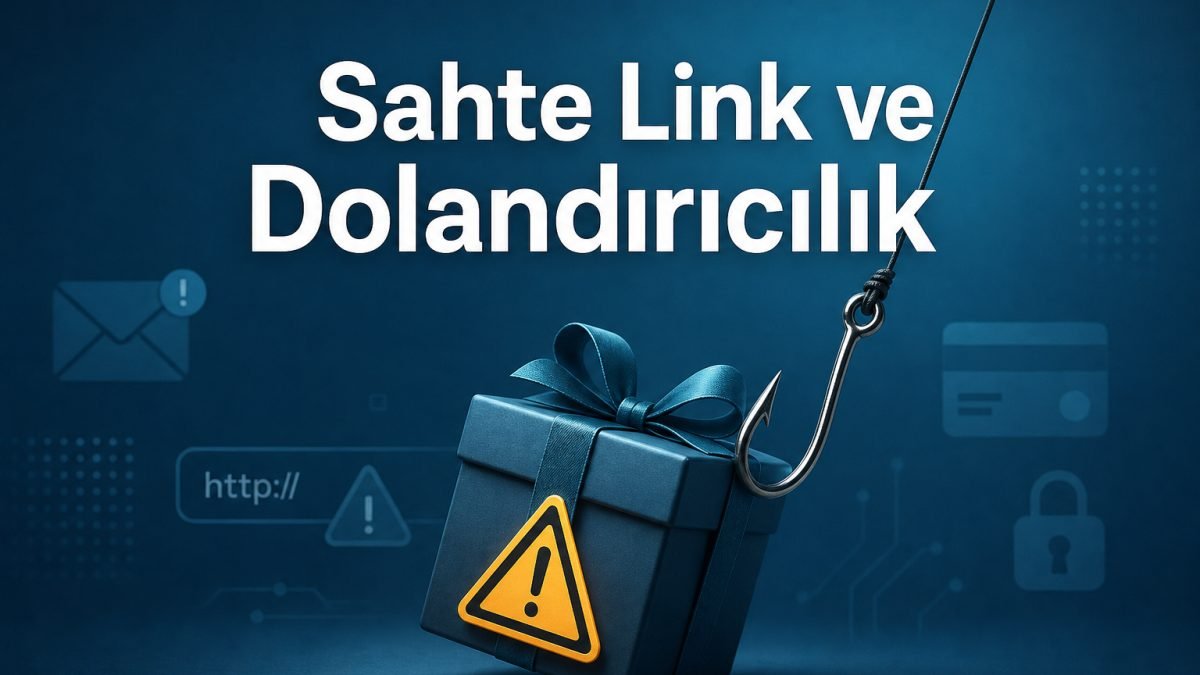
On the internet, you may sometimes see messages such as "free game", "free skin", "you won a gift", or "your account will be closed". Most of the time, these are not real gifts; they are fake link or scam traps. Their goal is to trick you and take your password, money, or personal information.
This article is the fifth part of our Mindful Internet and Technology series. Our goal is not to scare you; it is to help you recognize traps and pause before clicking.
Remember: Real websites and game companies do not ask for your password through messages or strange links. Pressure like "click now or you will lose it" is often a trap. If you are not sure, do not click; show it to an adult.
What is a fake link?
A fake link is a connection that looks like it goes to a real website but actually sends you to another address. There may be a tiny letter difference in the address bar. For example, while the real site is "gamename.com", the fake site may look like "gamename-login.net".
These pages ask for a password, phone number, or card information. If you enter your information, your account may be stolen or a harmful program may be downloaded to your phone.
What do free traps look like?
| Trap type | What does it say? | What really happens? |
|---|---|---|
| Free reward | "Congratulations, you won 1000 coins" | They ask for your password or personal information |
| Urgent warning | "Your account will be deleted in 24 hours" | It scares you and sends you to a fake login page |
| Fake raffle | "Fill out the form to win a tablet" | Information is collected, but no prize arrives |
| Free app | "Download the paid game for free" | Harmful file or fake store |
| Money promise | "Earn money from home, start now" | They first ask you to pay money, then disappear |
Who do scams target?
Anyone can be targeted; especially students who play games, like gifts, or make quick decisions. Sentences such as "everyone is doing it" and "only once" are meant to rush you. Slowing down is smart.
Examples close to real life
1. Free skin message inside a game
Someone in the game wrote, "Free skin link is here." You clicked the link, a page that looked like the game login page opened, and it asked for your username and password.
Real games do not work like this. Close the link, block the account, change your password, and show it to an adult.
2. WhatsApp chain message
You received a message saying, "Forward this to 10 people and get a free internet package."
Chain messages are usually false. Even if they do not ask for personal information or money, they bother other people. Do not forward it.
3. Fake bank or payment warning
An SMS arrived: "A transaction was made from your card, click to cancel."
Banks do not work through such links. Do not click. Show it to your mother or father and check through the official bank app.
4. A phone listed far too cheaply
On social media, a phone is being sold far below the normal price. A deposit is requested first.
Offers that are too cheap are often scams. Do not send money to someone you do not know.
5. Strange message from a friend account
A message came from your friend's account: "Go to this link and get a gift." But the writing style was different.
The account may have been stolen. Do not open the link; reach your friend another way and let them know.
Checklist before clicking
- Is the site name in the address bar correct?
- Does it ask for your password or card information?
- Is there pressure such as "now" or "last chance"?
- Is the source an official page you know?
- Do you have a bad feeling about it?
If even one answer makes you suspicious, do not click. Close it and ask an adult.
If you fell for a trap
- Change your password immediately.
- If you gave card information, tell your mother or father.
- Report and block the account.
- If needed, take a screenshot and ask for help.
A small note for parents: Instead of saying "never click any link", encourage your child to ask before opening a suspicious link. A family rule like "if a strange message comes, we look at it together" builds trust.
What is next?
In the next part, we will discuss chatting with someone you do not know and the risk of grooming.
Free often becomes expensive. Stopping to think protects you.