Talking with friends online, playing games, and sharing things can be very enjoyable. But sometimes you may face insults, mocking, threats, or unwanted messages. These are called cyberbullying. Like bullying in real life, it can hurt; and messages can remain as screenshots or spread to more people.
This article is the fourth part of our Mindful Internet and Technology series. In previous articles, we looked at general risks, personal information, and password security. Now we focus on cyberbullying and insults. Our goal is not to scare you; it is to help you recognize what it is, learn what you can do, and understand that asking for help is brave.
Remember: A behavior that humiliates, scares, or constantly bothers you is not your fault. You do not have to stay silent. Telling a trusted adult is the right step. Asking for help is not weakness; it is a smart action.
What is cyberbullying?
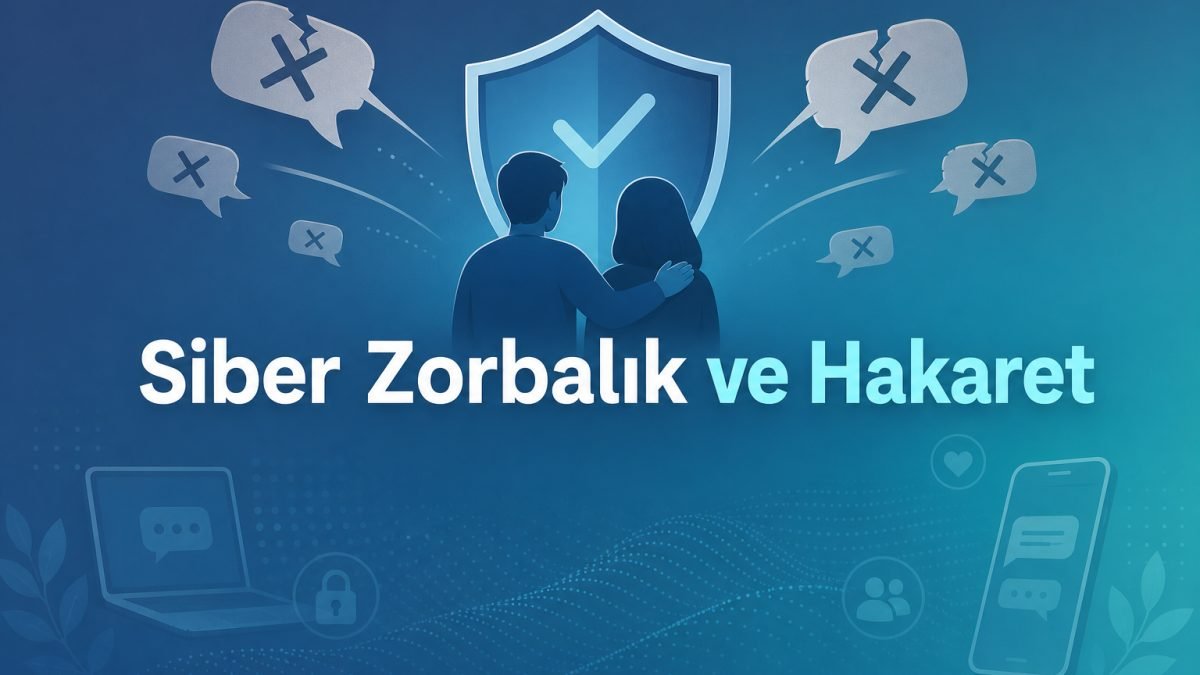
Cyberbullying means using the internet or phone to intentionally upset, scare, label, or exclude a person. Sometimes it looks like a one-time bad joke; sometimes it continues for weeks. Because it comes through a screen, people may think "it is not real", but its effect is real: shame, fear, sleep problems, and not wanting to go to school can happen.
An insult is saying degrading words about someone's appearance, voice, success, or identity. Every insult written online is not "just a comment"; sometimes it can also have legal consequences. Knowing this helps you avoid hurting someone on purpose.
Which behaviors can count as cyberbullying?
The table below is not for frightening you; it is for recognizing what is happening. If you see or experience one of these, you do not have to solve it alone.
| Behavior | What does it look like? | Why is it harmful? |
|---|---|---|
| Insults and mocking | Humiliating comments about appearance, voice, grades, or clothing | It harms self-confidence and the sense of belonging |
| Threat | Scary messages like "you will see" or "I will find your address" | It damages the feeling of safety; it is serious |
| Sharing without permission | Posting a private photo, chat, or video without consent | It violates privacy; spreading becomes hard to control |
| Group exclusion | Removing someone from a chat group, mocking "let us not include you" | It isolates the person and harms school relationships |
| Harassing with a fake account | Swearing, joking, or frightening from anonymous accounts | The effect is real even if you do not know who it is |
| Repeated harassment | Writing again from a new account even after being blocked | It makes the person feel watched and unsafe |
A joke may not feel funny to everyone. If the other person is hurt, saying "I was joking" does not fix the situation. Empathy matters online too.
Why does it slip out more easily on a screen?
When speaking face to face, many people soften; on a screen, they may write more harshly. Because:
- You cannot immediately see the other person's face, tears, or embarrassment
- Messages are written quickly; people think deleting is easy, but screenshots remain
- Others can join by liking or sharing
- The mistake of "everyone does it" does not make a behavior right
Something you write online may appear tomorrow in the classroom or family chat. That is why pausing and thinking before sending is a good habit.
What can you do if you are being bullied?
First, do not blame yourself. Then you can try these steps:
- Stop. Replying with the same harshness is not always a solution; sometimes it makes the event bigger.
- Save. If possible, take a screenshot where the date, username, and message are visible. This helps when telling an adult.
- Block and report. Use the application's block and report buttons.
- Tell someone you trust. Mother, father, teacher, school counselor, or school administration. You do not have to be alone.
- If there is a serious threat, adults will contact the necessary authorities; you do not have to handle it by yourself.
"Do not tell anyone" is a common pressure method. Telling is safe; teachers and families want to help with these situations.
If you see someone bullying another person
There are not only "victim" and "bully" roles. Sometimes you watch someone being targeted. Then you also have choices:
- Do not join the bullying; even saying "nice one" can give it power
- If possible, send a supportive message or say face to face, "you are not alone"
- If it is safe, tell an adult, especially if there is a threat or private photo sharing
- Without putting yourself in danger, choose something better than just watching
Good friendship means standing beside someone, not behind their back.
Examples close to real life
1. Mocking in the class group
Someone's photo was shared in the class chat group and humiliating comments were written under it. Some people laughed, some stayed silent.
This behavior is cyberbullying. Not joining, blocking, supporting the person, and telling your teacher are correct. "Everyone is writing" is not a reason.
2. Swearing and threats in game chat
After losing in an online game, your opponent swore at you and said, "I will come to your house."
You can leave the game and block or report the opponent. If the threat is serious, show an adult. Trying to "prove you are right" by replying often does not improve the result.
3. Screenshot of a private chat
A private message you wrote to a friend was shared somewhere else without permission.
This is a privacy violation. You can ask them to remove it, save evidence, and tell an adult. You also should not share someone else's private content without permission.
4. Humiliating by saying "it was a joke"
Someone keeps giving you nicknames and humiliating you in front of the class and online. When you say you are hurt, they say, "I am joking, do not be sensitive."
It is not being too sensitive; setting a boundary is healthy. You can tell them to stop. If they do not listen, telling an adult is right.
5. Harassment with a fake account
Someone you blocked opened a new account and started writing again.
Block again, save evidence, and show an adult. Reporting to platform support can also help. Do not think you are alone.
To avoid harming others
It is easy to write when angry, defeated, or laughing. Before sending, ask yourself:
- Would I be proud to say this message face to face?
- What would happen if the other person's mother or teacher saw it?
- Could this writing remain as a screenshot?
- Is my purpose to have fun, or to humiliate?
Apologizing takes strength, but it can repair a relationship. If you wrote something wrong, it is good to apologize honestly and not repeat it.
A small note for parents: If your child experiences bullying, first listen calmly; do not blame them. Starting with "What did you do to cause this?" can stop them from talking. Save screenshots together and contact the school counselor. It is useful to openly discuss the rule "we speak respectfully online too" at home.
Short questions you can ask yourself
- Will this message make me happy, or will it hurt me?
- How would I feel if someone wrote this to me?
- Should I save it and show an adult?
- Is blocking and reporting enough, or do I also need help?
- Am I supporting someone who bullies another person?
- If I am not sure, can I ask someone I trust?
Related reading and what is next?
In previous articles in our series, we looked at general risks, personal information, and password security. In this article, we focused on cyberbullying and insults. In the next part, we will discuss fake links, scams, and free traps.
Everyone deserves respect. The same kindness applies on a screen and face to face. If you are being bullied, you are not alone; telling a trusted adult is the strongest step that protects you.